It is essential to distinguish between the exhaustion derived from the hardship of the social mission and administrative burnout. While the former requires human and psychological support, the latter is an operational design failure. Technology cannot replace empathy, but it can eliminate the cognitive burden of inefficient processes that suffocate the daily work of teams.
The scale of the problem is alarming: according to the State of Nonprofits 2024 report by the Center for Effective Philanthropy, 95% of CSOs leaders express concern about burnout in their organizations, and 75% acknowledge that this exhaustion is impacting their organizations’ ability to achieve their mission. Moreover, nearly 50% of organizations have difficulty filling vacancies, largely due to the inability to offer competitive salaries and the accumulated wear on staff.
The goal of this article is to show how to use technology as a shield to regain quality time and prevent professional burnout. AI is not an end in itself; it is a tool to reduce internal friction through well-organized data, sensible automation, and intelligent assistance.
To put these concepts into practice, automation does not require major developments, but rather identifying ‘time thieves.’ For example:
1. Beneficiary management: A Google or Microsoft form that feeds data directly into a protected spreadsheet, eliminating manual data entry.
2. Internal communication: Automatic alerts on Slack or Teams when an urgent assistance request is received.
3. Documentation: The use of smart templates that auto-fill with project data, reducing the time spent writing technical reports.
The foundation: Data culture
Deploying AI over messy processes generates noise rather than relief. The first step is to build a strong data culture. This is not about acquiring software, but about establishing processes that guarantee the trust and protection of the beneficiaries.
According to the “AI for Social Change: Civil Society Perspective” (2024/2025) report, produced by TechSoup with support from Google.org, currently only 8% of organizations in the third sector have defined internal policies for the use of artificial intelligence. To move forward ethically, an organization must:
Centralize information: Reduce "silos" so that the team works with trusted and shared sources.
Establish governance: Define which processes can be automated and which employee is responsible for validating AI-supported decisions.
Promote inclusion: Ensure that digital transformation does not penalize those with lower technological literacy, always protecting their learning pathways.
Automation is the most cost-effective shortcut for organizations with limited resources. If technology absorbs repetitive tasks, CSOs workers recover energy for support work and social intervention.
Many organizations already use ecosystems such as Microsoft 365 or Google Workspace. These environments allow platforms to "talk" to each other. For example, when a beneficiary completes an application form, the system can automatically create a record, notify the responsible professional, and prepare a draft response. The result is a drastic reduction in administrative fatigue and manual errors.
Purposeful and ethical Generative AI
Once the database foundation is organized, Generative AI helps reduce the cognitive load.
Instead of producing more text, the focus should be on helping third-sector professionals think and decide better.
Today’s AI tools make it easier to:
Synthesize information: Summarize long meetings, create meeting minutes, or condense complex email threads.
Structure projects: Create initial drafts for impact reports or fundraising proposals, always under human review.
Knowledge management: Turn internal manuals into operational guides accessible to the entire team through customized assistants (internal GPTs designed to work only with the organization’s own materials and within its ethical framework).
For scenarios where privacy and cost control are critical, Small Language Models (SLMs) offer a sustainable and controllable option.
Unlike Large Language Models (LLMs), Small Language Models (SLMs) are optimized versions that require less computing power. For a CSO, this translates into three advantages: greater privacy by being able to run in local environments, lower implementation cost, and greater specialization in specific tasks without the ‘noise’ of more generalist models.
Wellbeing and community: The success metric
Administrative burnout usually does not come from the mission itself, but from operational bottlenecks. AI acts as a buffer that allows CSOs workers to regain space for fulfillment at work and focus on what really matters: accompanying people.
Technology adoption is experienced better when it is shared. Initiatives such as MEGAPHONE foster peer learning and community collaboration. Understanding AI use as a collective effort helps normalize technology and see it as an ally, so that social impact reaches those who need it sooner and better.
A concrete example is Banco Alimentare in Italy, a network of 21 food banks that redistributes around 90,000 tons of food per year to more than 7,500 charitable organizations. Thanks to digital tools such as the Bring the Food app and data analytics systems (SAP), their workers and volunteers can coordinate the collection of surplus from supermarkets and restaurants in real time, optimizing distribution routes and reducing food waste. This logistics digitalization has allowed their teams (mostly volunteers) to spend less time on manual management and more on direct support for beneficiaries.
As detailed in the “AI for Social Change” report, the digital skills gap is one of the biggest barriers to technology adoption, which reinforces the importance of implementing AI-assisted solutions on environments already familiar to CSOs teams.
These obstacles are not isolated perceptions; as the report confirms that lack of funding (74%) and the skills gap (58%) are the critical barriers preventing the social sector from protecting its most valuable asset: its staff’s time.
Practical paths depending on your ecosystem
There is no need to seek complex external tools; most organizations can use their current environment to reduce friction. Many already work with a productivity suite, and the path is usually the same: organize data, automate repetitive work, and use AI as support—backed by governance and human review.
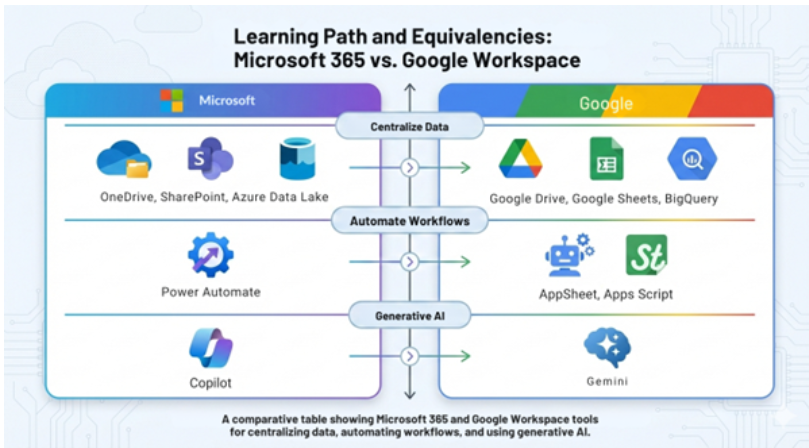 Figure 1, Self-made, with the support of Gemini (Banana Pro) for the synthesis and structuring of information.
Although many organizations already have Microsoft 365 or Google Workspace licenses, tools such as Copilot and Gemini are often underutilized. Copilot excels at transforming internal data into complex drafts within Word or analyzing trends in Excel, making it ideal for impact reports. On the other hand, Gemini offers seamless integration for teams that rely on Google’s collaborative environment, excelling at creative brainstorming and real-time email management.
How does this prevent burnout?
These assistants act as a “cognitive buffer.” By taking on the first draft of a funding proposal or summarizing endless email threads, they eliminate the blank page paralysis and the anxiety of information overload. This allows CSOs workers to preserve their mental energy for high-impact tasks, reducing the daily friction that leads to chronic burnout.
The organization of the future is not necessarily the most technological, but the one where AI functions as a quiet infrastructure that allows people to think, coordinate, and care without burning out.
In conclusion, adopting these five pathways, from data culture to AI-assisted tools, does not seek to turn the CSO into a technology company, but rather to build a wall against burnout. By delegating to the ‘quiet infrastructure’ the tasks that currently consume our administrative energy, we give teams back the mental space needed for empathy, strategy, and real care. An organization that protects its time is an organization with greater capacity for impact.
Your Feedback Matters
What did you think of this text? Take 30 seconds to share your feedback and help us create meaningful content for civil society!

Last updated on October 8th 2026 to reflect the latest developments. It's important to note that as of July 2026, Microsoft Copilot is slowly evolving into an AI agent platform from an AI assistant platform.
About the Author
Antonio García del Real is a specialist in digital strategy and process optimization for the third sector. With extensive experience in implementing technology tools and change management, he helps social organizations use innovation and AI as levers for efficiency and wellbeing for their teams.
Disclaimers
This piece of resources has been created as part of the AI for Social Change project within TechSoup's Digital Activism Program, with support from Google.org.
AI tools are evolving rapidly, and while we do our best to ensure the validity of the content we provide, sometimes some elements may no longer be up to date. If you notice that a piece of information is outdated, please let us know at content@techsoup.org.
This content was created, reviewed, and edited by Antonio García del Real with AI assistance.